Share
Facebook
Twitter
LinkedIn
Pinterest
Reddit
Digg
Tumblr
Email
The yoga community across Aotearoa is increasingly conscious about the environmental impact of their practice equipment. Traditional yoga mats often contain PVC and other synthetic materials that take decades to decompose, while many imported accessories travel thousands of kilometres before reaching New Zealand shores.
Local manufacturers are responding to this demand with innovative approaches to creating environmentally responsible yoga equipment. From cork-based mats to recycled rubber props, New Zealand companies are proving that sustainable practice extends beyond mindful movement to encompass the tools we use.
The shift towards locally made, sustainable yoga equipment reflects broader changes in consumer behaviour, where practitioners seek products that align with their values of environmental stewardship and community support.
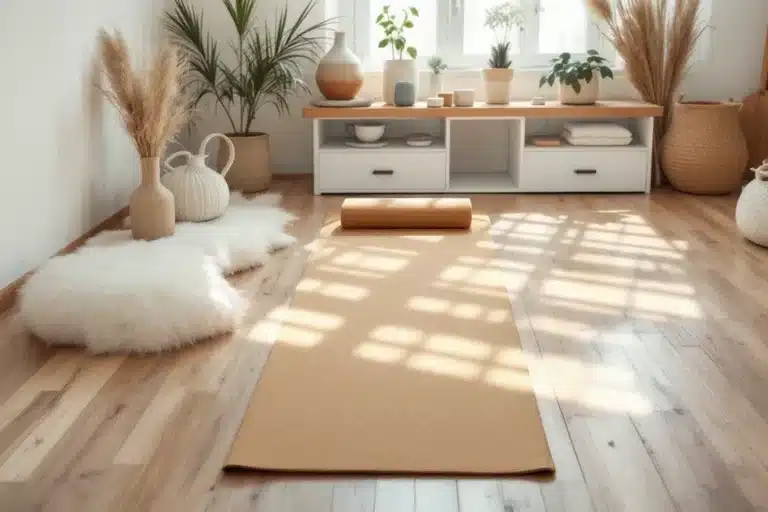
New Zealand yoga equipment manufacturers are pioneering the use of natural and recycled materials. Cork has emerged as a standout material, harvested from cork oak bark without harming the tree. This renewable resource provides excellent grip and antimicrobial properties naturally.
Recycled rubber from old car tyres is being transformed into durable yoga mats and blocks. This process diverts waste from landfills while creating products with superior cushioning and longevity. Some manufacturers are also experimenting with natural latex derived from rubber trees as a biodegradable alternative to synthetic foams.
Organic cotton and hemp are increasingly used for yoga straps, bolsters, and mat bags. These fibres grow well in certain regions of New Zealand and can be processed locally, reducing transport emissions while supporting domestic agriculture.
Several New Zealand companies have built reputations for producing high-quality, sustainable yoga equipment. These businesses typically operate on smaller scales than international manufacturers, allowing for greater attention to material sourcing and production methods.
Many local producers offer customisation options rarely available with mass-produced imports. This includes personalised mat thickness, custom colours using natural dyes, and bespoke props sized for individual needs. The direct relationship between maker and user often results in products better suited to New Zealand’s climate and lifestyle.
Some manufacturers have developed closed-loop systems where worn-out products can be returned for recycling into new equipment. This cradle-to-cradle approach ensures materials stay in productive use rather than ending up in waste streams.
Early sustainable yoga equipment sometimes compromised performance for environmental benefits, but today’s locally made products match or exceed traditional alternatives in functionality. Cork mats become more grippy with use and moisture, making them ideal for hot yoga or outdoor practice.
Natural rubber provides better shock absorption than many synthetic alternatives, reducing joint stress during longer sessions. The material’s durability means these mats often last significantly longer than cheaper imported versions, providing better value despite higher initial costs.
Breathability is another advantage of natural materials. Organic cotton bolsters and blocks allow better air circulation than synthetic alternatives, reducing odour retention and providing more comfortable support during restorative poses.
Sustainable yoga equipment often requires different care approaches than conventional gear. Natural materials may be more sensitive to harsh chemicals, making gentle, plant-based cleaners preferable. Many New Zealand manufacturers provide specific care instructions to maximise product lifespan.
Cork mats benefit from occasional conditioning with natural oils to maintain suppleness and water resistance. Natural rubber should be kept away from direct sunlight when not in use to prevent degradation. These small maintenance steps significantly extend product life.
Proper storage becomes more important with natural materials. Good ventilation prevents moisture retention that could lead to mould or degradation. Many local manufacturers include storage advice with their products, recognising that proper care maximises both performance and environmental benefits.

Locally made sustainable yoga equipment typically costs more than mass-produced imports, reflecting fair labour practices, quality materials, and smaller production runs. However, the total cost of ownership often favours sustainable options due to their superior durability.
A high-quality cork or natural rubber mat may cost two to three times more than a basic PVC mat but can last five to ten times longer with proper care. When divided over years of use, the daily cost becomes comparable or even favourable.
Many practitioners find that investing in quality, sustainable equipment enhances their practice experience. Better grip, cushioning, and comfort can improve focus and reduce distraction during sessions. Some report that using equipment aligned with their environmental values adds a positive psychological dimension to their practice.
The Consumer advocacy organisation provides guidance on evaluating product claims and comparing long-term value when making purchasing decisions.
Choosing New Zealand-made yoga equipment supports local employment and keeps money circulating within domestic communities. Many manufacturers are small businesses that rely on local suppliers for raw materials, creating multiplier effects throughout regional economies.
Direct relationships with local manufacturers often provide better customer service and warranty support than dealing with international retailers. Issues can be resolved quickly, and many producers offer repair services that extend product life rather than requiring replacement.
Some New Zealand yoga equipment manufacturers collaborate with local yoga studios and teachers, creating community connections that strengthen both businesses and practice communities. These relationships often result in products better suited to local needs and preferences.
Innovation continues in sustainable yoga equipment manufacturing across New Zealand. Research into new materials includes experiments with recycled ocean plastics, agricultural waste fibres, and bio-based polymers that decompose safely at end of life.
Digital technologies are enabling more efficient production methods that reduce waste and energy consumption. Some manufacturers are exploring 3D printing for custom props using biodegradable materials, potentially allowing on-demand production that eliminates storage and transport requirements.
Collaboration between manufacturers, researchers, and environmental groups is driving standards development for sustainability claims in yoga equipment. This work aims to provide consumers with clearer information about environmental impacts and performance characteristics.
The evolution of sustainable yoga equipment manufacturing in New Zealand demonstrates how environmental consciousness and quality craftsmanship can complement each other effectively. As more practitioners recognise the connection between their equipment choices and environmental impact, demand for locally made, sustainable options continues growing, encouraging further innovation in materials and production methods that benefit both users and the planet.
This article is proudly brought to you by New Zealand Wellness Hub. At New Zealand Wellness Hub, we connect ancient wisdom with modern healing approaches. Through our network of health professionals and evidence-based resources, we’re dedicated to enhancing your holistic well-being journey across Aotearoa. Explore our latest posts and stay informed with the best in Medical Services, Health Food & Supplements, Health & Wellness Industries, Corporate Wellness, Alternative Therapies, and Lifestyle & Consumer Products!
Tania R. says:
Does the vinegar mix leave a smell on the mat at all, because we tried that once and our wee studio smelt like a chip shop for days.
Daniel Lee says:
Yeah a vinegar wipe down is a good call, just watch it on natural rubber since it can dry the surface out over time. Mates of mine reckon a diluted mix and a quick rinse keeps things sweet without the wear.
Brad W. says:
Yeah airing them out is key. Reckon a good wipe down with white vinegar helps too.
Hannah Wilson says:
How do you handle the cork crumbling over time if the mat gets heavy daily use? We found a good cork mat needs airing out regularly or it breaks down faster than expected.
Phil says:
Yeah the transfer station thing is real, they won’t touch PVC. Cork breaks down way quicker, reckon that’s the way to go.
Alicia N. says:
PVC mats are a nightmare to get rid of here, our local transfer station won’t even take them. Reckon the cork ones from NZ brands break down way faster anyway. Wonder if anyone’s tried composting one at home.